EN
EN

Caterpillar Cylinder Heads: Types, Applications, and How to Choose the Right One
A Caterpillar cylinder head is not a part that should be selected by appearance alone. Two heads may look nearly identical but differ in valve arrangement, injector configuration, coolant passages, casting details, or the engine serial-number range they support. Ordering by engine model only can therefore lead to costly fitment problems.
This guide explains the main cylinder-head options available for Caterpillar diesel engines, the information buyers should prepare before requesting a quotation, and the warning signs that may indicate a damaged head. It is written for repair shops, equipment owners, distributors, and purchasing teams sourcing replacement Caterpillar engine parts.
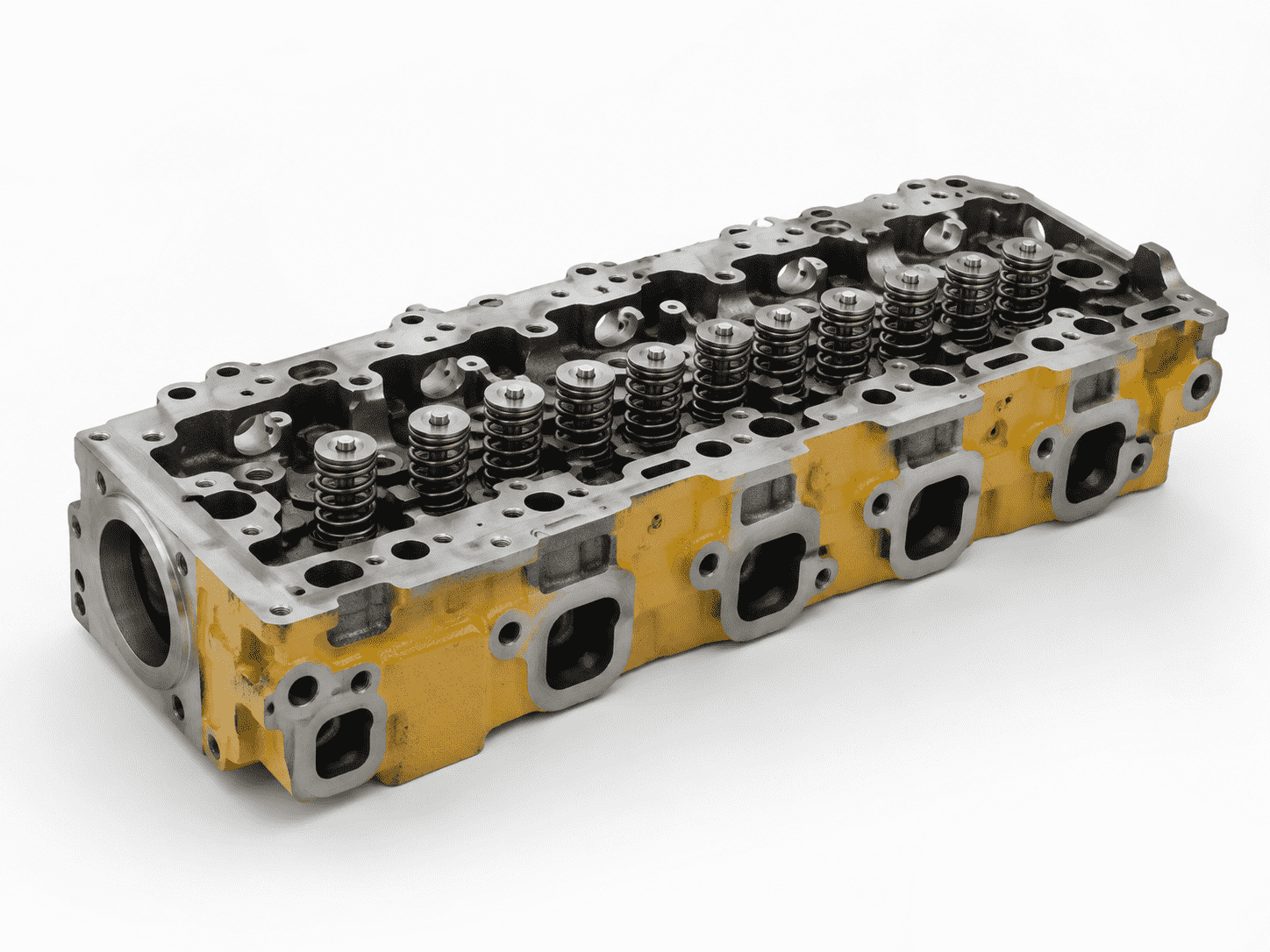
What Does a Caterpillar Cylinder Head Do?
The cylinder head seals the top of the engine block and forms part of the combustion chamber. Depending on the engine design, it also carries valves, valve seats, guides, springs, injector-related components, intake and exhaust passages, and cooling passages.
Because the head is exposed to combustion pressure and repeated heating and cooling cycles, correct material, machining accuracy, surface flatness, and installation practice all matter. A cylinder head that is dimensionally incorrect or poorly installed can cause compression loss, coolant leakage, abnormal combustion, or premature gasket failure.
The cylinder head must also match the surrounding parts. The head gasket, valves, injectors, rocker components, manifolds, and fasteners must correspond with the engine build. This is why a supplier may ask for more information than just “CAT 3126” or “CAT 3306.”
Main Types of Caterpillar Cylinder Heads
1. Bare cylinder head
A bare head is generally supplied without the full valve train and related assembled components. It may be suitable when a repair shop plans to reuse serviceable parts from the original head or install components according to its own rebuild specification.
Before buying a bare head, confirm exactly what is included. The meaning of “bare” can vary between suppliers. Ask whether valve seats, valve guides, plugs, and other fitted items are already installed.
2. Assembled cylinder head
An assembled head typically includes more components than a bare casting, such as valves, springs, guides, and related hardware. The exact configuration still varies, so the parts list should be confirmed in writing before an order is placed.
This option can reduce workshop preparation time, but it does not remove the need for inspection. Valve clearances, sealing surfaces, shipping protection, and compatibility with the existing engine components should still be checked.
3. Complete cylinder-head assembly
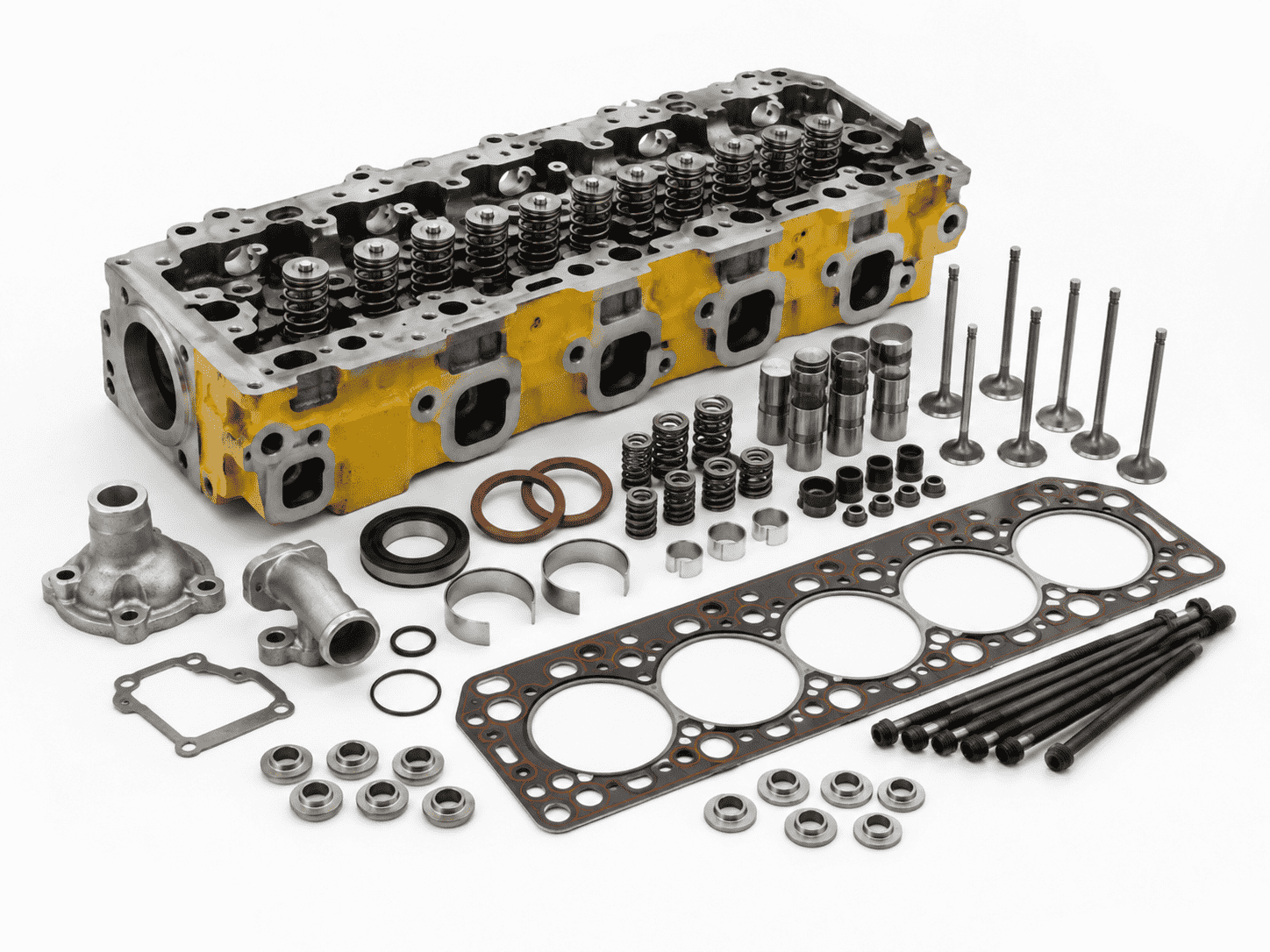
A complete assembly may include most of the parts required for installation, but “complete” is not a universal standard. Some assemblies include injector-related components or rocker parts, while others do not. Buyers should request a detailed packing list rather than relying on the word “complete.”
| Head option | Best suited for | What to confirm before ordering |
|---|---|---|
| Bare head | Experienced rebuild shops reusing or separately sourcing components | Seats, guides, plugs, casting version, machining status |
| Assembled head | Repairs that need a partially prepared replacement | Valves, springs, retainers, guides, included hardware |
| Complete assembly | Projects seeking a more installation-ready solution | Full packing list, injector setup, rocker components, gasket inclusion |
Where Caterpillar Cylinder Heads Are Used
Caterpillar diesel engines are used across a wide range of equipment and industrial applications. Replacement heads may be required for excavators, loaders, bulldozers, generators, trucks, industrial machinery, and other heavy-duty equipment.
However, machine model and engine model should both be checked. The same basic engine family may have different arrangements across applications or production periods. Providing the machine model helps the supplier verify the context, but the engine identification information remains essential.
Commonly requested Caterpillar engine families include 3116, 3126, 3304, 3306, 3406, C7, C9, C13, C15, C18, and other industrial and construction-engine applications. Availability and configuration depend on the exact engine build.
Common Symptoms of a Damaged Cylinder Head
A failed cylinder head does not always produce one clear symptom. The same signs can also be caused by a head gasket, cooling-system fault, injector issue, cylinder-liner problem, or incorrect installation. Diagnosis should therefore be based on inspection and testing rather than assumption.
Possible warning signs include:
- Repeated overheating or unexplained coolant loss
- Combustion gas entering the cooling system
- White exhaust smoke after normal warm-up
- Oil and coolant contamination
- Low compression in one or more cylinders
- External coolant or oil leakage near the head joint
- Rough running, difficult starting, or reduced power
- Frequent head-gasket failure after previous repair
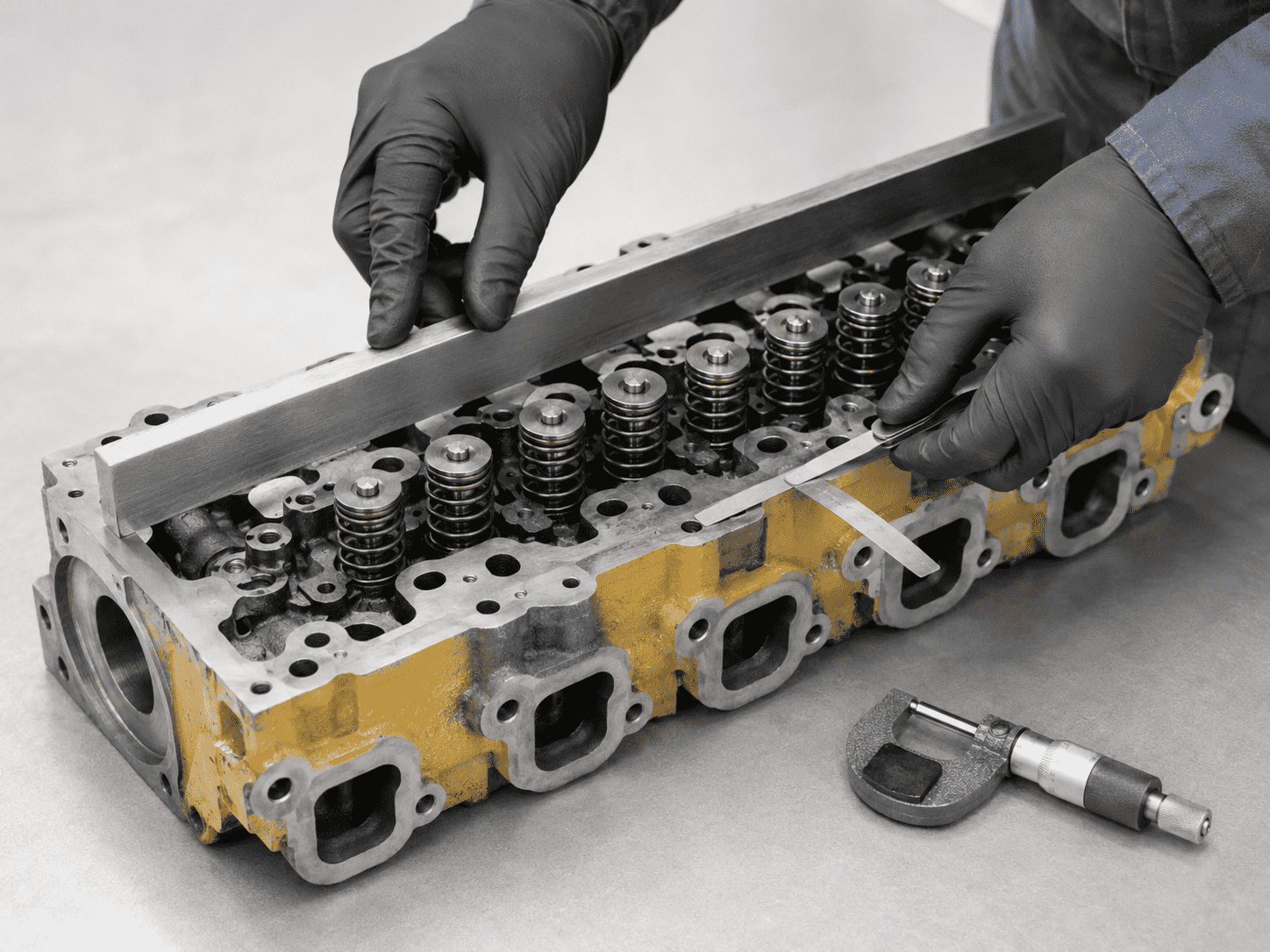
Before replacing the head, check the cooling system, gasket condition, bolt condition, block deck, liner protrusion where applicable, and installation history. Replacing only the cylinder head will not solve a problem caused by an uneven block surface, incorrect tightening procedure, or unresolved overheating.
How to Identify the Correct Caterpillar Cylinder Head
The most reliable quotation request contains several pieces of information. Sending them together reduces back-and-forth communication and lowers the risk of receiving the wrong part.
Information to send your supplier
- Engine model: for example, 3116, 3126, 3306, 3406, C9, or C15.
- Engine serial number: photograph the full identification plate whenever possible.
- Arrangement number: this may help distinguish different builds within the same engine family.
- Original part number: include superseded or cross-reference numbers if known.
- Casting number: photograph all visible markings on the old head.
- Machine model and application: excavator, loader, generator, truck, or industrial equipment.
- Required configuration: bare, assembled, or complete.
- Quantity and destination country: useful for stock and shipping quotations.
Do not rely only on photos taken from one side. Useful photos include the combustion face, intake and exhaust sides, top surface, injector area, identification plate, and all casting marks.
Why the engine model alone may not be enough
Engine families can remain in production for years and may be supplied in different configurations. Changes may affect valves, injectors, ports, coolant passages, sensors, and mounting points. An engine described simply as “Caterpillar 3126” may therefore require further identification before the correct head can be confirmed.
What Should Be Checked Before Installation?
Even a new replacement head should be inspected before installation. Shipping damage, debris, incorrect configuration, or mismatch with the removed part should be identified before assembly begins.
A practical receiving inspection should include:
- Compare part numbers, casting marks, ports, holes, and mounting points.
- Check the sealing surface for visible damage.
- Confirm that all ordered components are included.
- Clean the cooling and oil passages according to workshop procedure.
- Inspect the block deck and related components.
- Use the correct gasket specification and fasteners.
- Follow the applicable tightening sequence and torque procedure.
- Resolve the original cause of overheating or lubrication failure.
Installation data should come from the correct service information for the exact engine arrangement. Torque values and assembly procedures should not be guessed or copied from a different engine version.
Should You Repair the Old Head or Replace It?
The answer depends on the damage and the capability of the machine shop. A reusable head may be pressure-tested, checked for cracks and flatness, and rebuilt with replacement valves, guides, seats, or other components. Replacement may be more practical when the casting is severely cracked, distorted, corroded, repeatedly repaired, or unavailable for reliable reconditioning.
Cost should be compared on a complete-job basis. Consider machining, replacement components, labor, downtime, warranty terms, and the risk of a second repair. A low initial repair price may not be economical if the head cannot be restored to the required condition.
How to Evaluate a Caterpillar Cylinder-Head Supplier
A good supplier should help verify fitment instead of immediately accepting an incomplete order. Before purchasing, ask the following questions:
- Can you verify the part using the engine serial number and photos?
- Is the quotation for a bare, assembled, or complete head?
- Which parts are included in the package?
- Is the item currently in stock?
- What inspection or quality-control information is available?
- How is the head protected during international shipping?
- What information is required if a fitment issue occurs?
IZUMI ORIGINAL supplies a broad range of replacement parts for Caterpillar engines, including overhaul components, pistons, cylinder liners, fuel-system parts, gaskets, and other engine repair parts. Buyers can also browse the wider engine-parts range or send engine identification details for fitment checking.
Frequently Asked Questions
What information is needed to quote a Caterpillar cylinder head?
Provide the engine model, engine serial number, arrangement number when available, original part or casting number, machine model, required head configuration, quantity, and destination country. Photos of the old head and identification plate are strongly recommended.
Is a complete cylinder head ready to install?
“Complete” does not mean exactly the same thing for every supplier. Request a written list of included parts and inspect the assembly before installation. Some gaskets, injectors, rocker components, or fasteners may need to be ordered separately.
Can I order a cylinder head using only the engine model?
Sometimes, but it is not the safest method. Engines with the same model name may have different arrangements or production revisions. Serial numbers, part numbers, casting marks, and photos improve fitment accuracy.
Does white smoke always mean the cylinder head is cracked?
No. White smoke can have several causes, including fuel-system, coolant, compression, or operating-condition issues. The head, gasket, injectors, cooling system, and related parts should be tested before a diagnosis is made.
Should the head gasket be replaced with the cylinder head?
A used head gasket should not be reused. The replacement gasket must match the exact engine specification, and the block, liner height where applicable, fasteners, and sealing surfaces should also be checked.
Need Help Finding the Correct Caterpillar Cylinder Head?
Send the engine nameplate, old part number, casting number, machine model, required quantity, and clear product photos. The IZUMI ORIGINAL team can check available options and prepare a quotation for your application.
Contact on WhatsApp Request a QuoteCaterpillar and CAT are trademarks of their respective owner. Product references are used for identification and compatibility purposes. Always confirm the exact engine specification before ordering or installing replacement parts.